4fleet

Fleet / free worksheet

Vehicle inspection checklist for chauffeur and limo fleets

A chauffeur vehicle inspection checklist should cover roadworthiness, passenger presentation and readiness for the first booking. Use this free daily PDF or weekly Excel sheet to record the vehicle, checks, defects and follow-up. Adapt it to your vehicle and licensing conditions; it does not replace a required statutory inspection report.

Daily PDF: one vehicle per day. Excel: one week per vehicle. No signup required.

4fleetDAILY VEHICLE CHECK

Vehicle __________ Date __________

Checked by __________ Time _______

Safety

  • Brakes and parking brake
  • Steering
  • Tires and wheels
  • Lights and signals
  • Mirrors and glazing
  • Wipers and washers
  • Seat belts
  • Leaks and warning lights
  • Required emergency equipment

Passenger ready

  • Cabin clean
  • Water stocked
  • Chargers tested
  • Umbrella available
  • Child seats fitted for booking
  • Name board ready
  • Required documents in vehicle

Job ready

  • Fuel for first job
  • Route checked
  • Flight status checked

Defect / action / reviewed by __________

What the checklist covers

The sheet separates a vehicle problem from a presentation task. A clean cabin does not establish roadworthiness, and a tick beside a mechanical check does not replace competent inspection or repair. Use the defect area to describe what was found, who was told and what happened before release.

Field blockWhat to record
Vehicle and inspectorVehicle identifier, date, time, person checking and the week's start date in Excel. Keep the sheet tied to a particular vehicle rather than filing an anonymous set of ticks.
SafetyBrakes, steering, tires, wheels, lights, mirrors, glazing, wipers, seat belts, leaks, warning lights and required emergency equipment. Follow the vehicle's instructions and your applicable inspection schedule.
Passenger readyCabin, water, tested chargers, umbrella, child seats fitted for the booking, name board and documents. Mark a genuinely inapplicable item N/A rather than pretending it was checked.
Job readyFuel for the first job, route and flight status. These are dispatch-readiness prompts, not a guarantee that road or flight conditions will remain unchanged.
Defect and releaseDescribe the finding, report it, record action and the person reviewing it. Stop and resolve a safety concern before using the vehicle; a signature alone does not make a defect safe.

How to run the check before the first job

  1. Identify the vehicle

    Write the vehicle identifier, date, time and inspector before checking. For the weekly workbook, set the week-start date and use the correct day's column. Create a separate workbook or printed sheet for each vehicle.

  2. Check, then record

    Work through the safety block before passenger and job readiness. Mark Pass, Defect or N/A as appropriate. Do not prefill a run of passes before seeing the vehicle. Follow your operator's process for any item you cannot assess.

  3. Close the defect loop

    Describe the defect in words and notify the responsible person. Record the action and review before release. Keep the original finding visible so the next person can understand why the vehicle was held and how the issue was resolved.

Daily vehicle inspection field mapIdentify the vehicle and inspector, complete the safety, passenger-ready and job-ready blocks, then record defects, action and review.Vehicle / date / inspectorSafety / passenger / job readinessDefect / action / review

US, UK, Ireland and Canada differences

United States

A general pre-job checklist and a regulated DVIR serve different purposes. Where 49 CFR 396.11 applies, it sets defect reporting, signature and repair-certification requirements. Its current text does not require a no-defect report and includes exceptions, including a carrier operating only one commercial motor vehicle. Confirm applicability and state requirements for your operation.

49 CFR 396.11 · verified on 2026-10-19

United Kingdom

DVSA's van walkaround guidance is useful for vans; it is not a blanket rule for every chauffeur car. Check your licensing authority's vehicle conditions and the regime that covers your vehicle. Record a defect clearly and arrange the appropriate repair before continuing with an unsafe vehicle.

DVSA van walkaround guidance · verified on 2026-10-19

Ireland

Use the NTA conditions for your SPSV category. Taxi-specific equipment is not automatically a limousine requirement. Check the vehicle's licence discs and required equipment against the current category guidance, alongside your own passenger-ready checks.

NTA SPSV vehicle requirements · verified on 2026-10-19

Canada

Trip-inspection rules are provincial. Ontario's commercial-vehicle regulation uses inspection schedules, defect classifications and report particulars for the vehicles it covers. Confirm the relevant province, vehicle class and exemptions; do not treat an Ontario schedule as a Canada-wide rule for every sedan.

Ontario Regulation 199/07 · verified on 2026-10-19
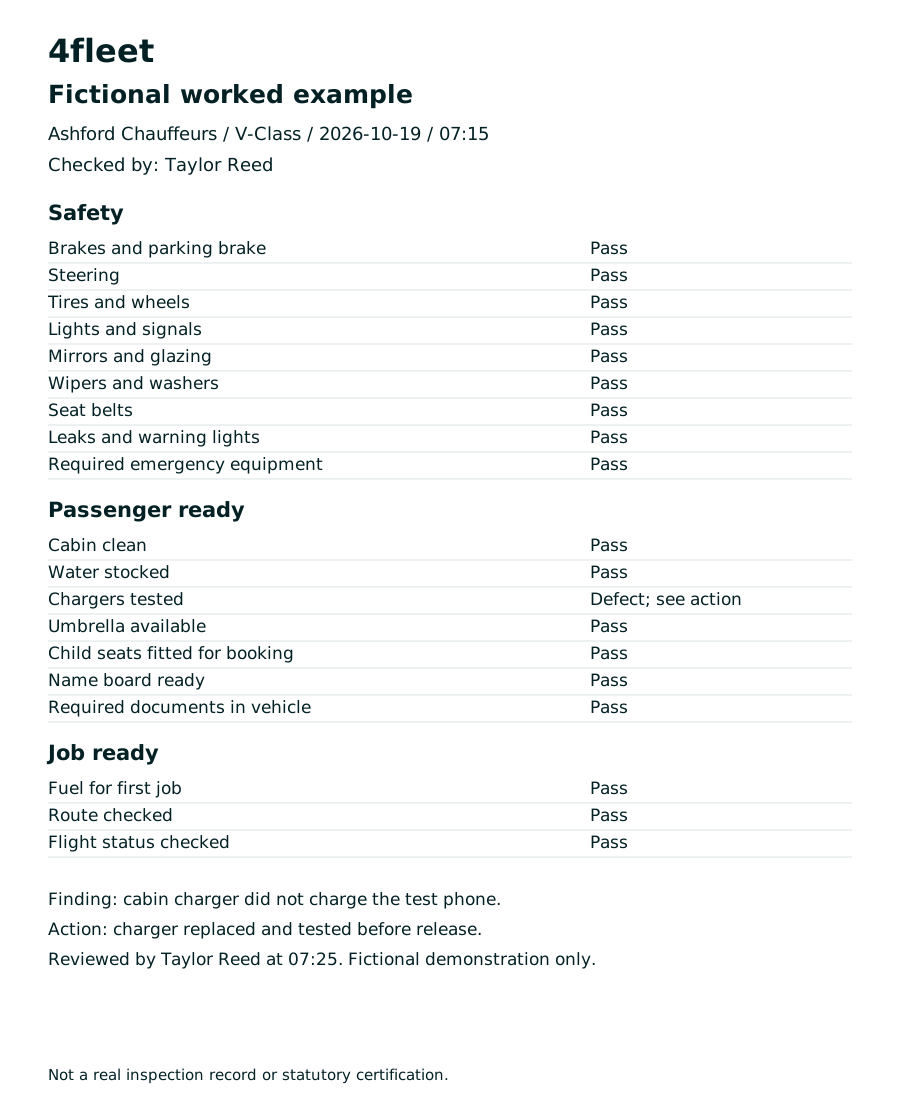
Fictional Ashford Chauffeurs V-Class checklist recording a replaced and tested charger before release.
Illustrative, fictional example; not a real inspection record.

From blank sheet to useful record

A completed checklist

This fictional Ashford Chauffeurs example records a V-Class check by Taylor Reed. A cabin charger failed its check, was replaced and tested, and the action was recorded before release. The example illustrates a readable record, not a vehicle safety assessment, manufacturer specification or customer testimonial.

When a paper checklist stops working

When several people use separate sheets, make ownership and filing explicit: who receives a defect, who records the repair and who checks the vehicle's documents before assigning it. A spreadsheet can organize the checks, but it still depends on people completing and reviewing the record.

4fleet maintenance records include an inspection type, and vehicle documents can carry expiry dates. The fleet capture shows document readiness and an expiring-documents filter. Use those records alongside your inspection process; 4fleet does not provide this daily checklist inside the driver app.

Explore driver and vehicle records
4fleet fleet table showing vehicle document readiness and the Documents expiring filter for Ashford Chauffeurs.

Document readiness supports the vehicle record alongside your own inspection process.

  1. The Documents expiring filter helps focus the fleet view. The capture does not show a completed daily checklist.

Vehicle inspection questions

What should a vehicle inspection checklist include?

Identify the vehicle and inspector, record safety checks, describe defects and follow-up, and add passenger and booking readiness. Adapt the fields to the applicable authority's inspection schedule and your vehicle instead of assuming one generic form is sufficient everywhere.

How often should chauffeur vehicles be inspected?

This template is designed for a check before the first job of the day. Additional checks, maintenance and statutory inspections follow your vehicle's condition, operating procedure and applicable rules. A daily sheet does not replace periodic inspections.

Is a DVIR the same as a vehicle inspection checklist?

No. A DVIR is a report required in particular regulated circumstances. This sheet is a general operational checklist. Confirm whether a statutory report applies to your operation and use the required fields and process when it does.

Who signs the checklist?

The person who actually performed the check should identify themselves. Record the person responsible for defect follow-up separately. Where a statutory report applies, follow its signature and repair-certification requirements, rather than relying only on this worksheet's sign-off.

How long should inspection records be kept?

Use the applicable authority's retention rule and your insurer's or contractual requirements. For reports covered by 49 CFR 396.11(a)(4), the report and associated certifications are retained for three months. That is not a universal retention period for this template or for other jurisdictions.

49 CFR 396.11 · verified on 2026-10-19

General information, not legal or tax advice. Sources verified on 2026-10-19; check the relevant authority before acting.
Put the records to work

Keep your next booking organised.

Compare 4fleet plans
Loading…